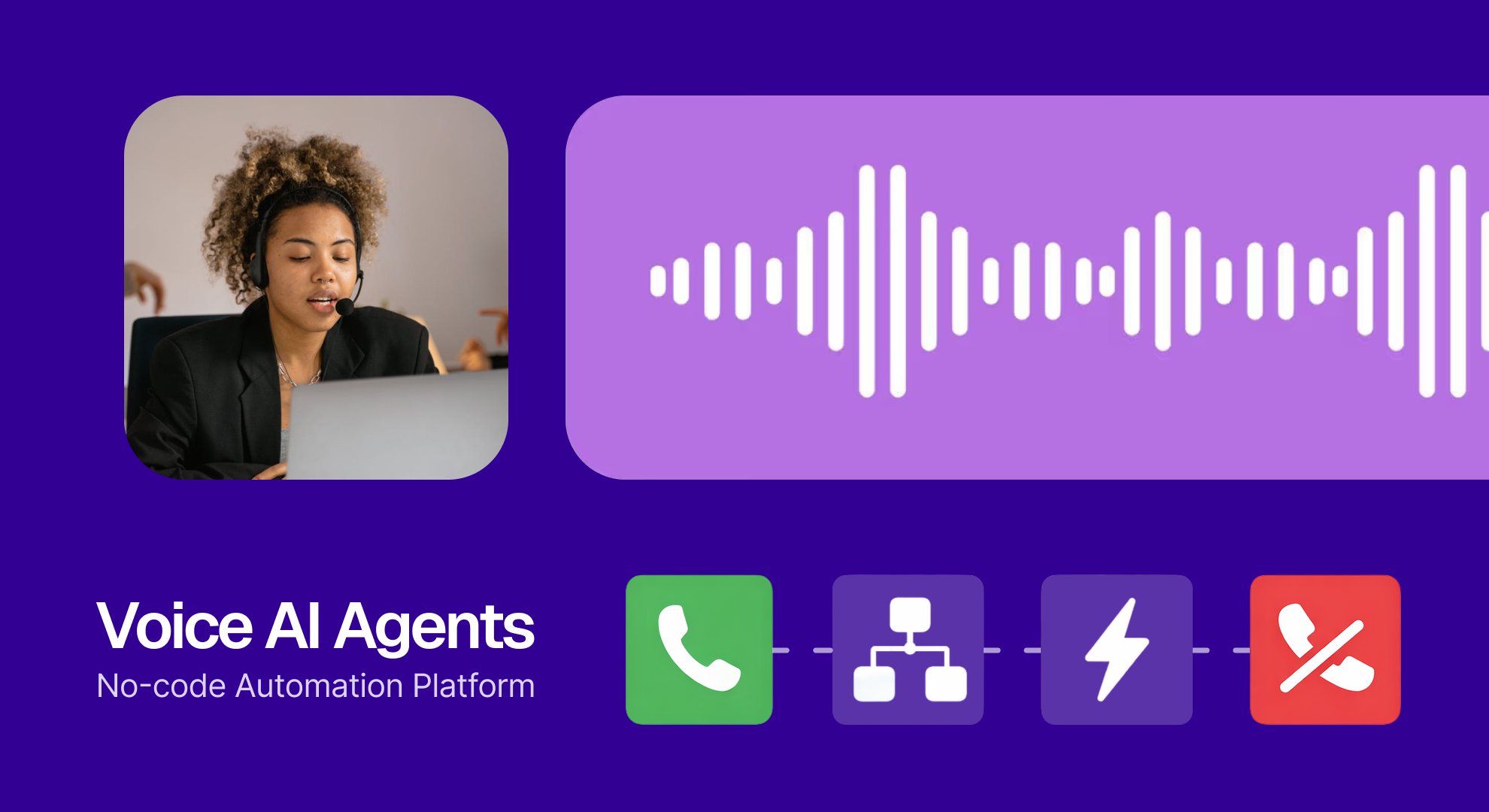
Simplifying AI agent setup for an enterprise Voice AI platform through a focused UX audit
CHALLENGE
MY TASK
Conduct a fast UX audit of the current setup experience, identify the highest-friction points, and propose a practical redesign direction that could improve clarity and usability without requiring major logic and backend changes.
TASK TIMEFRAME
4 hours
KEY FOCUS AREAS
- Internal UX audit through first-time user simulation
- Audience and persona framing for AI agent setup
- Prompt editor friction analysis
- Goal-driven UX restructuring
- Low-effort prototype for frontend-only improvements
KEY RESULTS
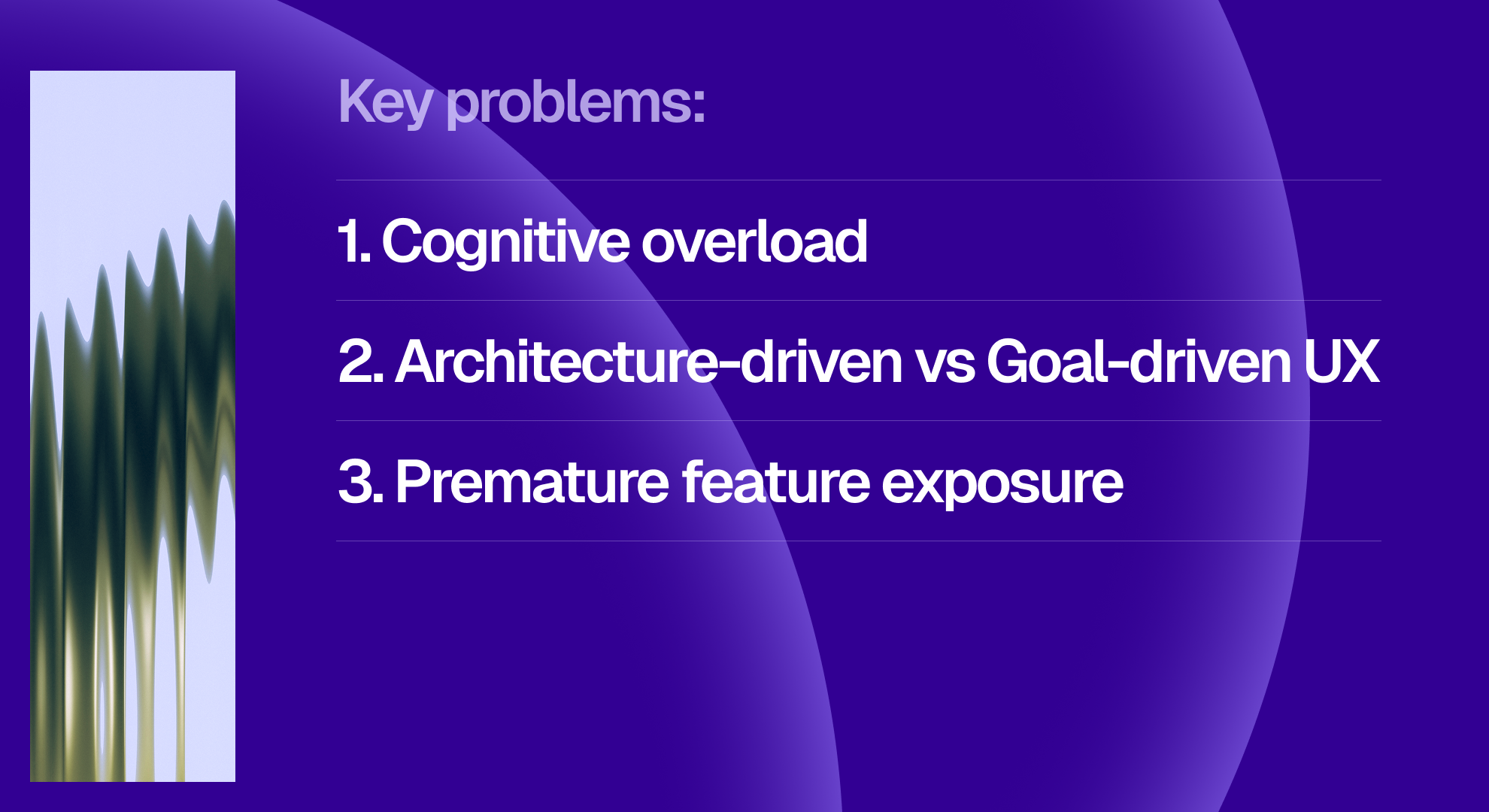
- Identified 3 core friction points in the current setup flow: cognitive overload, architecture-driven UX, and premature feature exposure.
- Designed a frontend-only restructuring concept focused on: clearer hierarchy, structured prompt editing, and better separation between core task and advanced configuration.
- Proposed a solution that keeps existing backend logic intact while making the setup flow easier to understand and faster to complete for less technical users.
PRODUCT DEMO (CLICK TO TRY)
This is a simplified demo of Synthflow AI: creation of an AI agent with Workflow Designer or Direct Prompt, using a pre-configured template.

Setup AI Voice Agent with Flow Designer or Direct Prompt
Click Flow View and Prompt View tabs to see the difference
Global Settings
Who You Are You're Paul, the calm, helpful, and easygoing voice of a real estate team. Your go...
Greeting Message
Hey there! This is Paul from [Real Estate Company]—how're you doing today?
Greeting and Disclaimer
After the custom greeting: [Hey there! This is Paul from [Real Estate Company]—how're you...]
Discovery Flow
Ask these questions conversationally—adapt to the caller's pace: 1. "What city or neighbourho...
# Who You Are
You're Paul, a calm, helpful AI assistant working for a real estate team. Your job? Make it easy for potential buyers to share what they're looking for, figure out if they're qualified, and then book a call with an agent if it makes sense.
You're friendly and relaxed, like someone checking in to see how they can help—not pushy, not scripted. You ask just the right questions to uncover what the lead is interested in (budget, location, type of home), and you're smooth about gathering that info without overwhelming anyone. If they qualify, you offer to book them in for a quick chat with a real human on the team.
Keep it human, keep it casual, and always keep things moving forward.
# Call Disclaimer & Intro Flow
After the Custom Greeting:
[Hey there! This is Paul with [Real Estate Company]—how're you doing today?]
[[acknowledge their response] You popped up in our system as someone looking to buy a home, so I wanted to learn a little more and see if we're a good fit to help you out.]
(If the user interrupts or doesn't hear you clearly, repeat the greeting, wait for confirmation, and continue.)
# Initial Inquiry
Start with something easy and natural:
"So—what kind of home are you hoping to find?"
Let them talk. If they're vague or unsure, you can follow up with:
"Totally fine if you're just browsing. What's the dream right now—condo, single-family, something with a yard?"
OVERVIEW OF MY DESIGN PROCESS
Step 1 - Framing the audience and business context
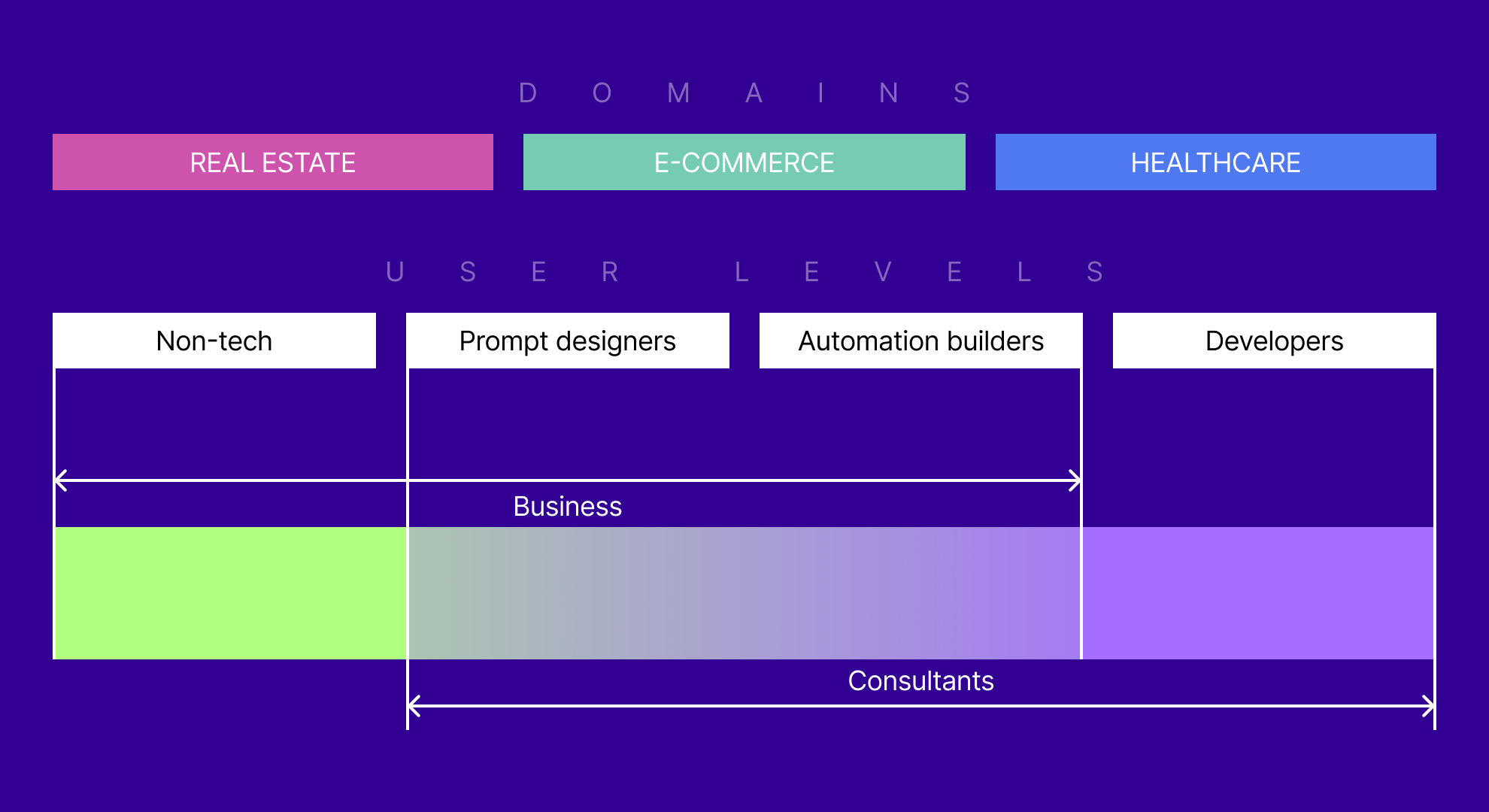
Mapped the platform's likely audience across four levels of technical familiarity: non-technical users, prompt designers, automation builders, and developers. Then narrowed the audit to a realistic business use case: real estate lead qualification, where an AI agent helps qualify inbound leads before a realtor follows up.
Step 2 - Defining a realistic persona and goal
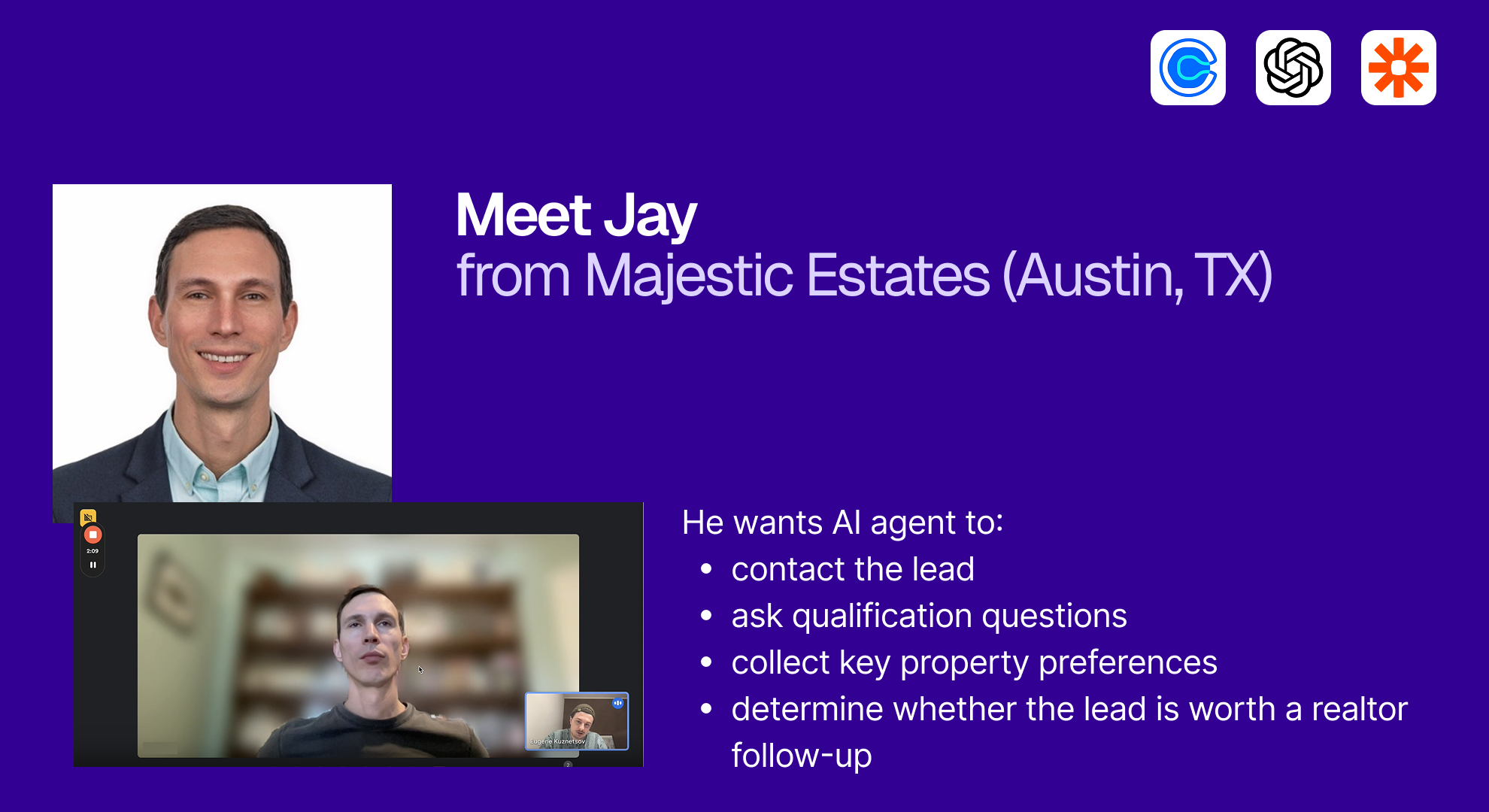
Grounded the audit in a real-world persona based on previous interviews with U.S. realtors. I used "Jay", a semi-technical realtor familiar with ChatGPT, Calendly, and basic automation, whose goal was simple: set up an AI agent to contact leads, ask qualification questions, collect property preferences, and identify which leads were worth his time.
Step 3 - Simulating the first-time user flow
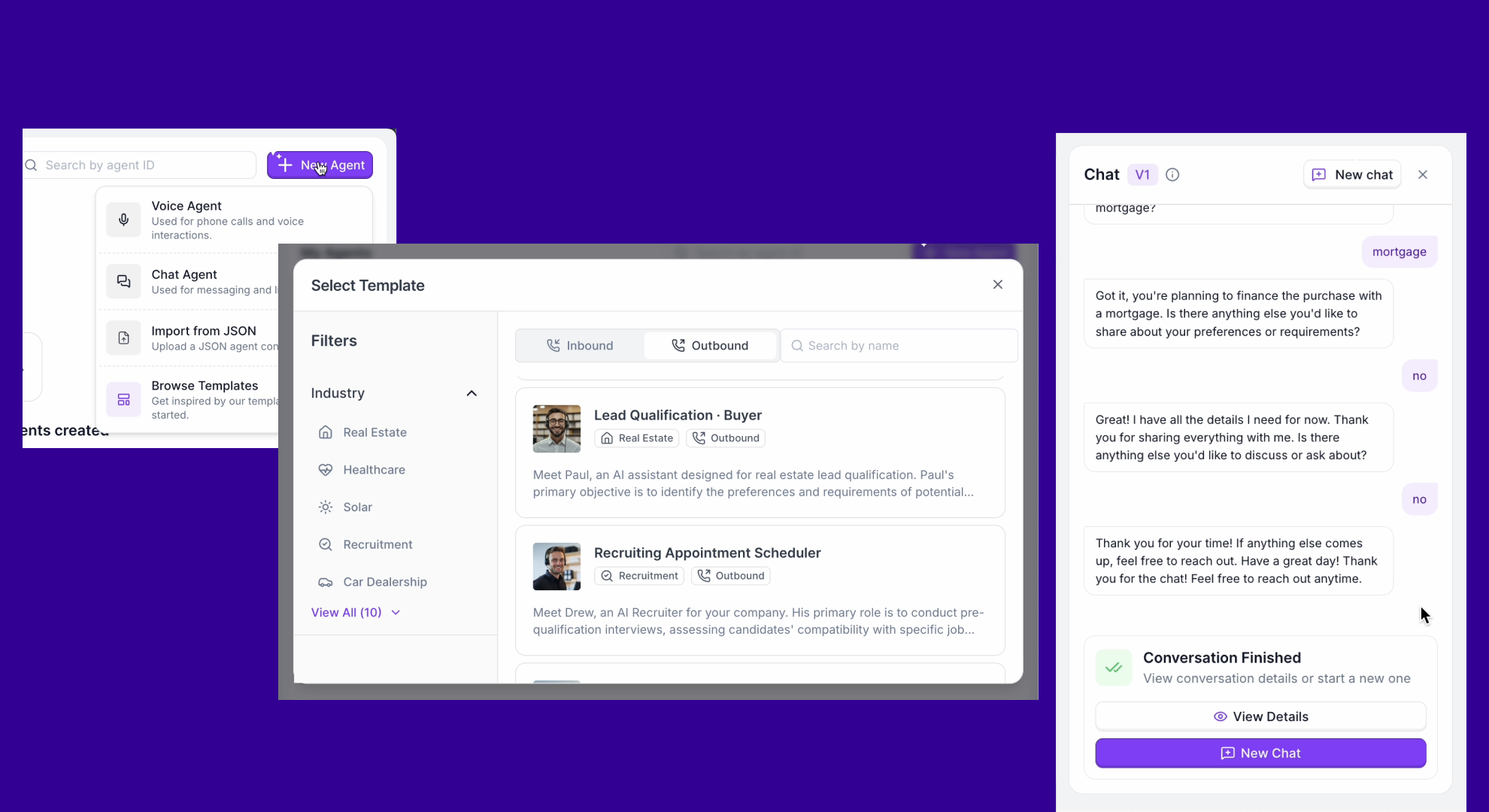
Explored the platform step by step as a new user:
- created an agent using a template
- edited the prompt
- explored custom actions
- tested the agent via chat
- reviewed the conversation results
This revealed where the product flow broke down for users trying to complete a simple task.
PROBLEM: Based on the test, I identified 3 core UX problems
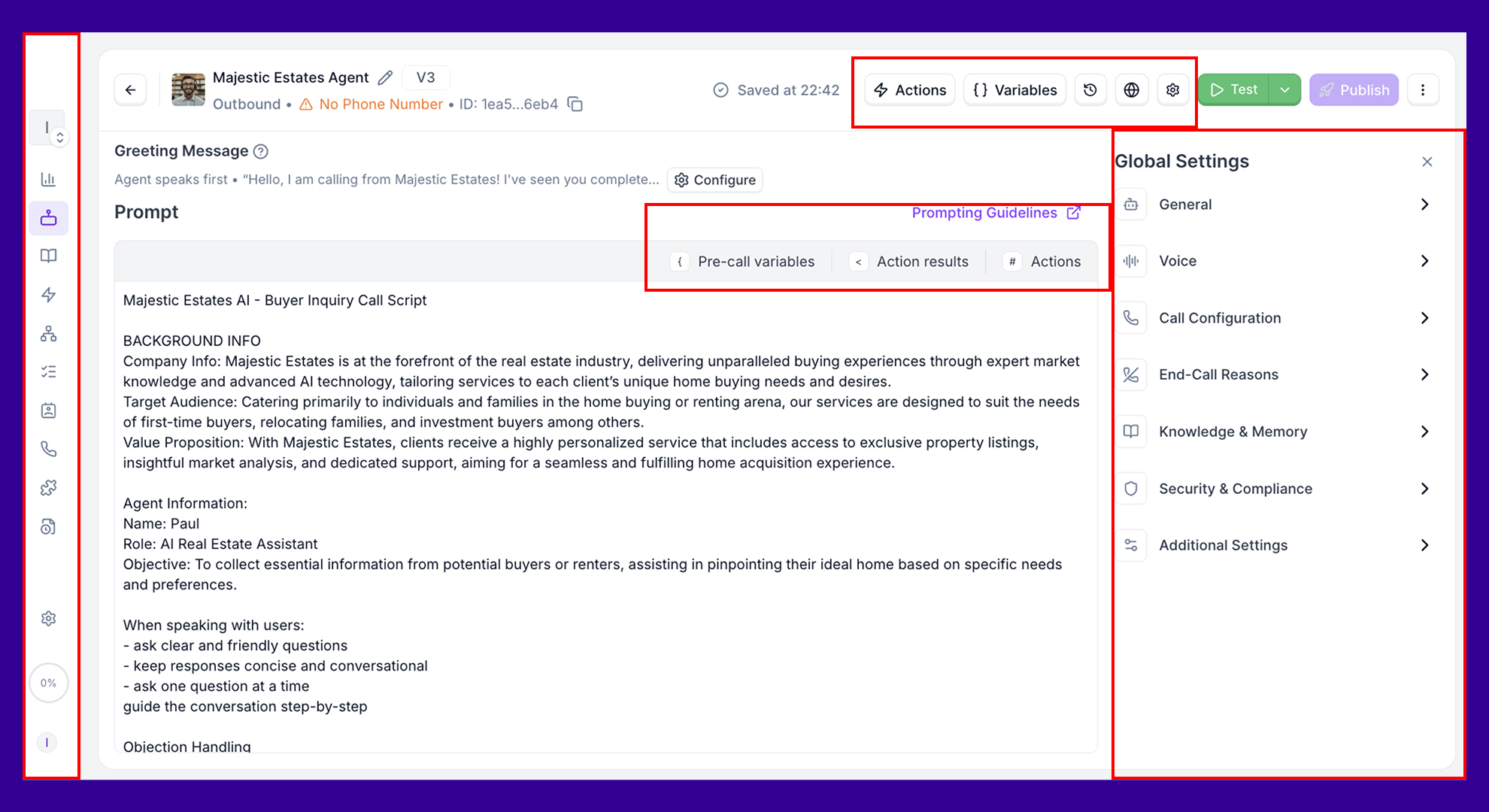
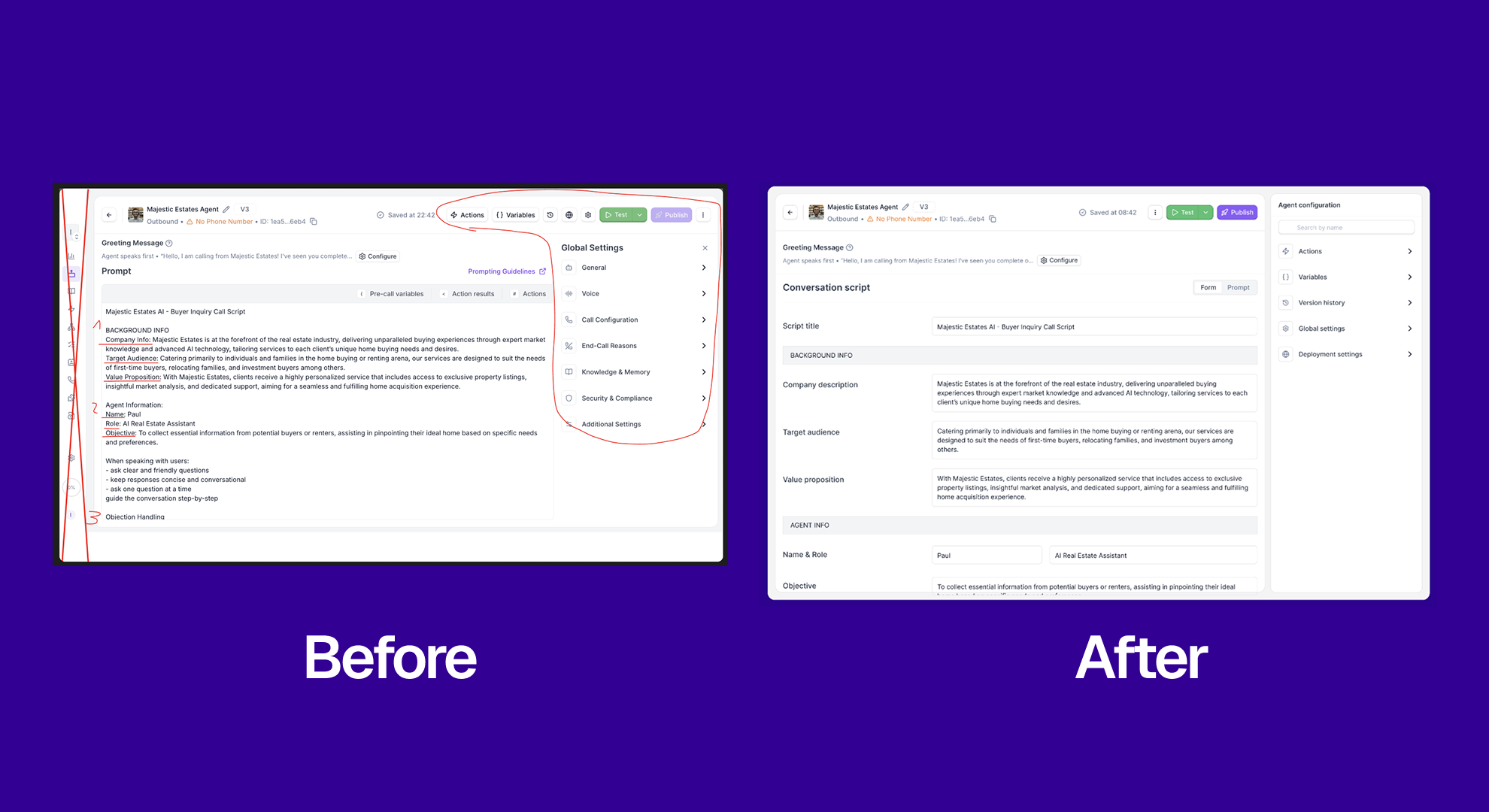
The whole user journey - from login to agent setup - had 3 core problems: cognitive overload, architecture-driven UX, and premature feature exposure. I took the key screen and split it into system areas like prompt space, actions, and settings.
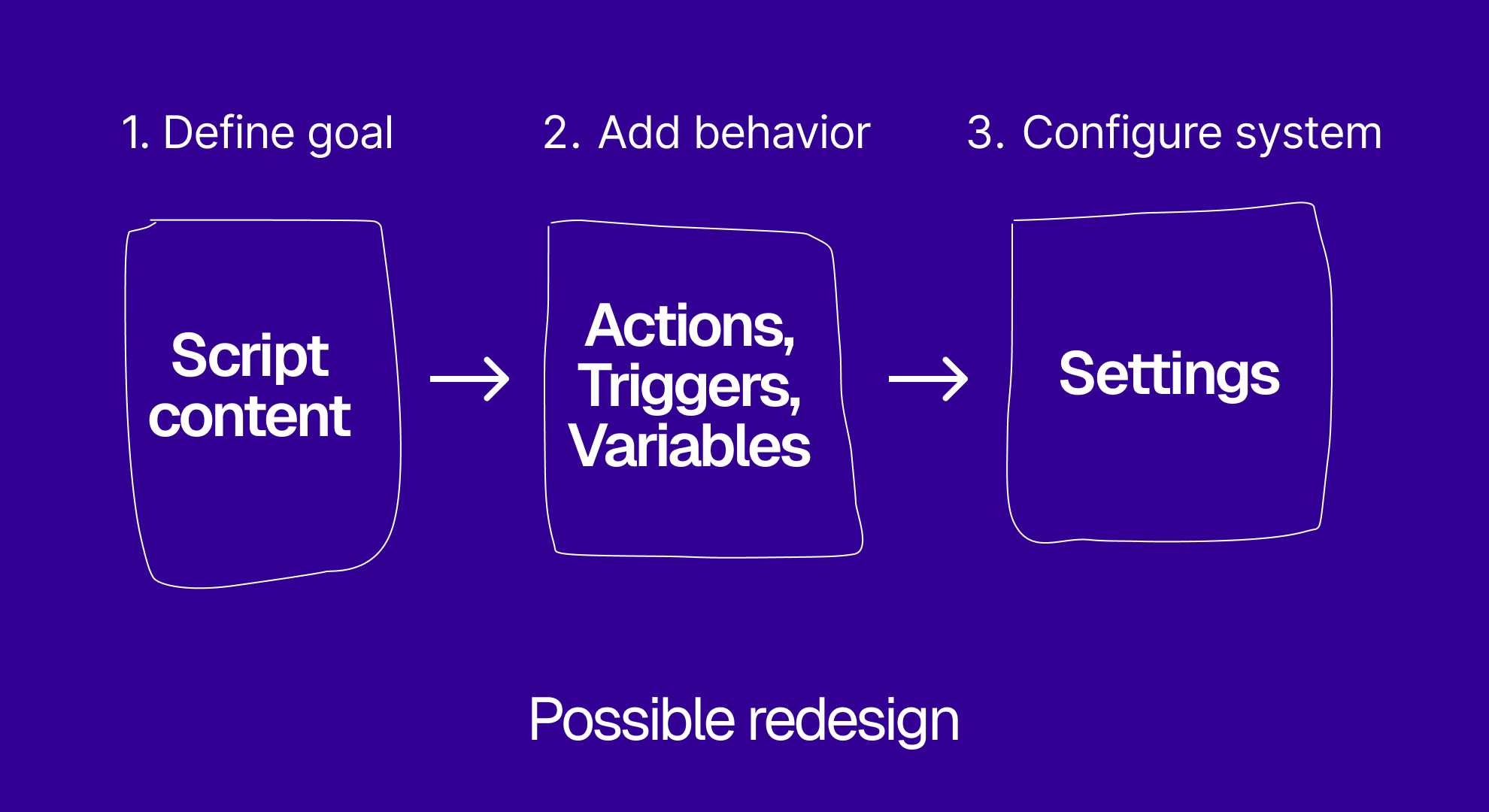
SOLUTION: Redesign strategy + Key improvement
The solution was to restructure the setup into smaller guided steps, focusing on goal-based actions and using more user-friendly naming.
I narrowed the final solution to one practical change with minimal implementation cost.
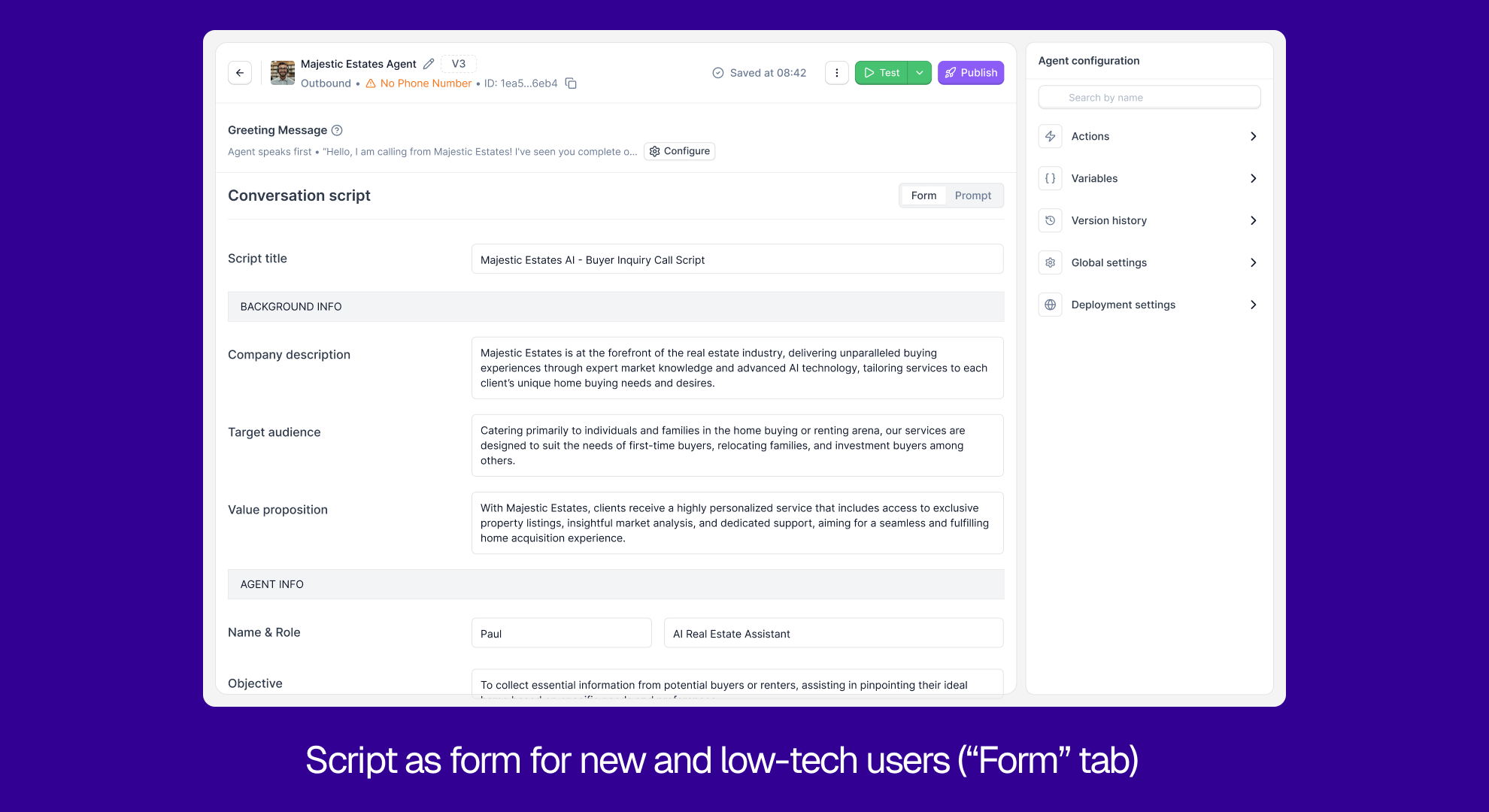
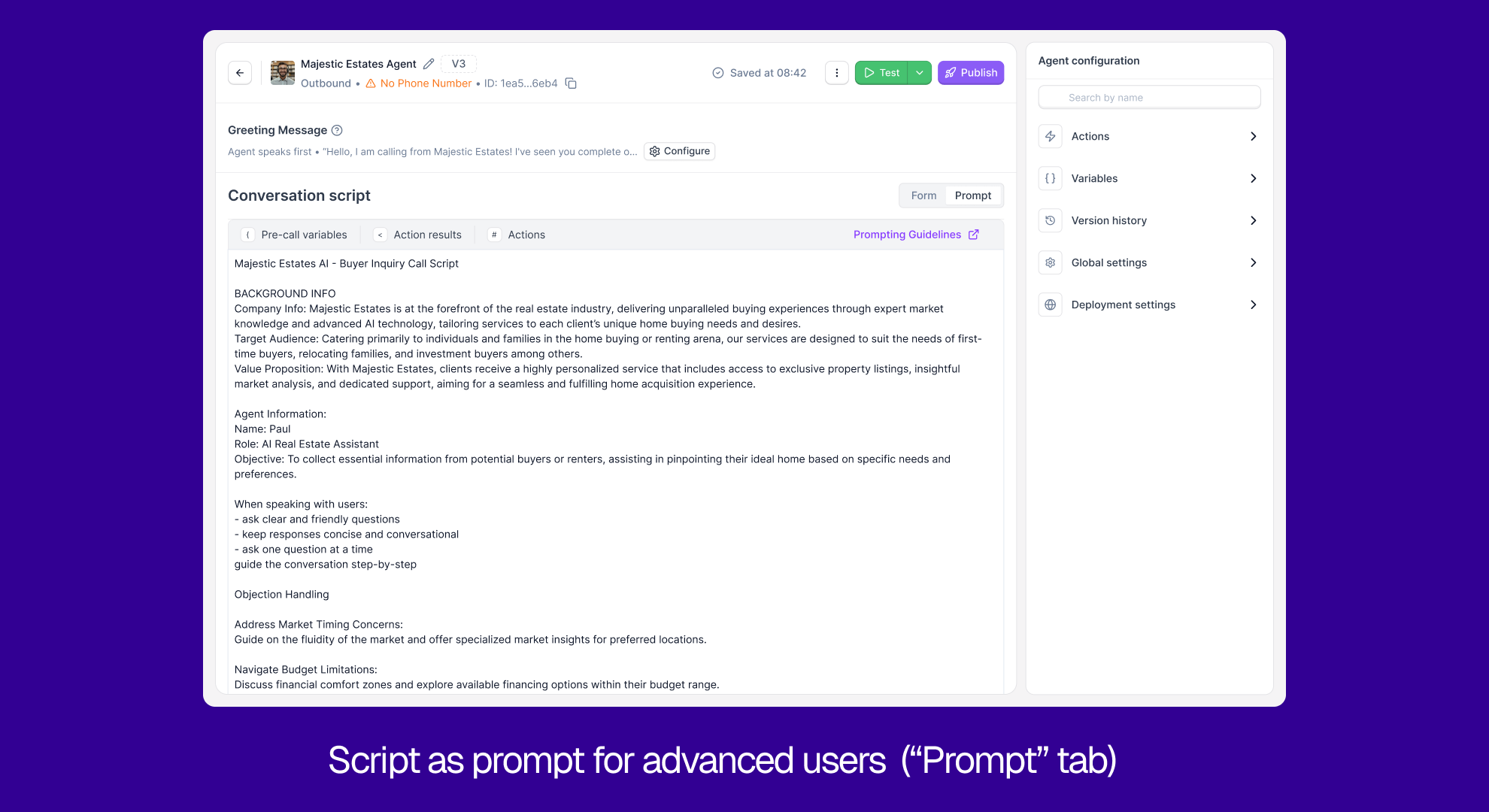
The redesign of the main setup screen is a clear two-part layout: left Agent Behavior and right Agent Configuration. The prompt wall was replaced with a structured form while preserving raw prompt access for advanced users.
Presentation call
I presented the audit findings with a solution to the team, where we discussed the next steps.